Understanding Idea Generation
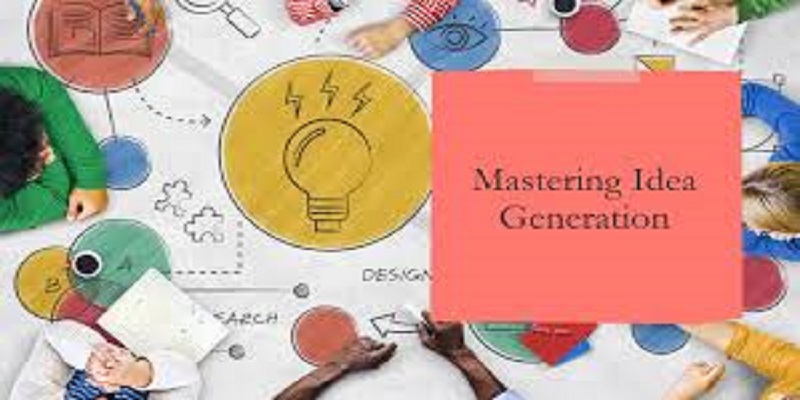
Idea generation is the process of producing novel and useful concepts that can lead to innovation. It is the foundation of problem-solving, creativity, and entrepreneurship. Knowledge and creativity work together to enhance idea generation, providing both the information and the imaginative framework necessary to explore possibilities. While knowledge offers a base of facts, experiences, and insights, creativity allows for unconventional thinking and the formation of original connections. Mastering idea generation requires practice, awareness, and the ability to balance structured thought with free-flowing imagination, ensuring that concepts are both innovative and actionable in real-world applications.
The Role of Knowledge in Idea Generation
Knowledge forms the foundation for generating meaningful ideas. A well-informed mind can recognize patterns, evaluate opportunities, and make connections that others may overlook. Cognitive science suggests that individuals with diverse and deep knowledge are more likely to produce original ideas because they can combine information in unique ways. Knowledge also helps in refining and validating ideas, ensuring practicality and relevance. Continuous learning from books, research, experiences, and observation strengthens the brain’s ability to innovate. By integrating knowledge systematically into the idea-generation process, individuals increase the likelihood of producing creative concepts that have tangible impact and real-world value.
Creativity as the Driving Force
Creativity fuels the process of idea generation by enabling individuals to think beyond conventional solutions. It allows the mind to explore alternatives, reframe problems, and make novel associations between unrelated concepts. Neuroscientific research shows that creative thinking involves activating multiple brain networks simultaneously, fostering cognitive flexibility and innovative thought. By cultivating creativity through exercises such as brainstorming, mind mapping, or lateral thinking, individuals can enhance their ability to generate original ideas. When combined with knowledge, creativity ensures that ideas are not only imaginative but also informed, practical, and capable of leading to meaningful innovation across diverse domains and challenges.
Techniques for Effective Idea Generation
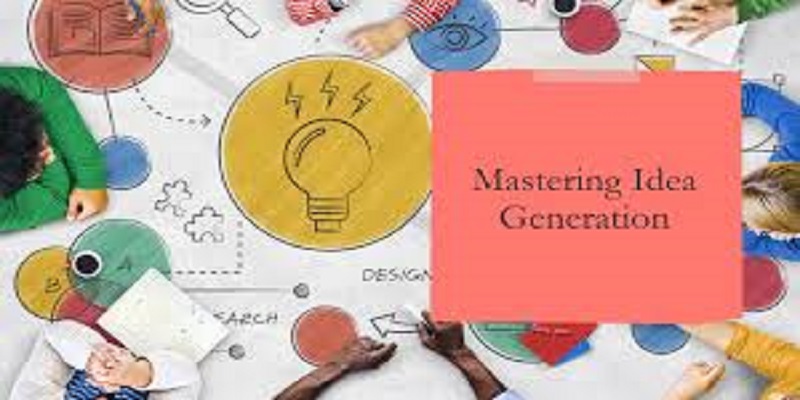
Several techniques can enhance the idea-generation process. Brainstorming encourages free-flowing thoughts without judgment, generating a wide array of possibilities. Mind mapping helps organize and visualize relationships between concepts. SCAMPER (Substitute, Combine, Adapt, Modify, Put to another use, Eliminate, Reverse) promotes systematic exploration of new approaches. Analogical thinking leverages knowledge from different fields to inspire unique solutions. Structured exercises allow individuals to harness both creativity and knowledge effectively. By practicing these techniques consistently, people can develop a habit of generating ideas efficiently, ensuring a constant flow of innovative concepts ready for implementation in real-world situations.
Encouraging Curiosity
Curiosity is a powerful driver of idea generation. By asking questions, exploring new experiences, and challenging assumptions, individuals expand their knowledge and stimulate creative thinking. Neuroscience indicates that curiosity enhances cognitive flexibility and promotes connections between different brain regions, which facilitates innovative thought. Curious individuals are more likely to explore alternative solutions and discover unique approaches. Encouraging curiosity through learning, experimentation, and observation ensures that the mind remains engaged and receptive to novel ideas. Cultivating curiosity is essential for mastering idea generation, as it continuously fuels creativity while grounding it in knowledge and informed exploration.
The Importance of Observation
Observation is a practical way to combine knowledge and creativity for idea generation. By attentively watching environments, behaviors, trends, and processes, individuals can identify opportunities, challenges, and gaps that spark innovative concepts. Observation helps in recognizing patterns and making connections that are not immediately obvious. It can involve studying competitors, analyzing customer behavior, or exploring unrelated industries for inspiration. Scientific studies show that observation stimulates cognitive networks and enhances associative thinking, both of which are crucial for creative idea generation. By practicing mindful observation, individuals gather knowledge that feeds their imagination, producing ideas that are both original and actionable.
Mind Mapping for Structured Creativity
Mind mapping is an effective tool for structuring creativity and knowledge simultaneously. By visually connecting concepts, individuals can see relationships and patterns that may not be apparent in linear thinking. Mind maps encourage divergent thinking, allowing multiple ideas to emerge, while also supporting convergent thinking to prioritize and refine concepts. This technique facilitates brainstorming, collaboration, and problem-solving, making the idea-generation process more efficient. Integrating mind mapping into daily practice helps individuals systematically transform scattered thoughts into coherent, actionable ideas. This method ensures that creativity is organized, informed, and aligned with practical goals for innovation.
Collaboration Enhances Idea Quality
Collaboration is a catalyst for generating high-quality ideas. Working with others brings diverse perspectives, expertise, and experiences into the creative process. Collaborative brainstorming sessions stimulate discussion, challenge assumptions, and reveal opportunities for novel solutions. Social learning and feedback mechanisms improve idea refinement and practical application. Research indicates that diverse teams are more likely to produce innovative outcomes compared to individuals working alone. By engaging in collaborative environments, individuals can merge knowledge with collective creativity, resulting in ideas that are richer, more practical, and more likely to lead to impactful innovations in various contexts.
Iteration and Refinement
Idea generation is rarely a one-step process; iteration is essential. Once ideas are generated, refining, testing, and improving them ensures practicality and effectiveness. Iteration allows individuals to incorporate feedback, identify weaknesses, and explore alternative approaches. By cycling through idea generation, evaluation, and adjustment, creative concepts evolve into robust solutions. Iterative refinement bridges the gap between imagination and reality, ensuring that ideas are actionable and implementable. Embracing iteration fosters a mindset of continuous improvement, where knowledge and creativity work together to transform initial concepts into innovative solutions that are both original and impactful.
Using Technology to Boost Creativity
Technology can significantly enhance idea generation by providing tools for research, collaboration, and visualization. Digital brainstorming platforms, mind-mapping software, and project management systems facilitate the collection, organization, and refinement of ideas. Technology also enables access to vast amounts of information, data analysis, and pattern recognition, supporting knowledge-driven creativity. By leveraging technological resources, individuals can streamline the idea-generation process, test concepts efficiently, and collaborate with global teams. Integrating technology ensures that ideas move from abstract thoughts to actionable solutions quickly, enhancing both the quantity and quality of creative output.
Balancing Divergent and Convergent Thinking
Effective idea generation requires balancing divergent and convergent thinking. Divergent thinking promotes the exploration of multiple possibilities and encourages originality, while convergent thinking focuses on evaluating, refining, and selecting the most feasible ideas. Neuroscientific research shows that activating both cognitive modes enhances innovation and problem-solving. By intentionally alternating between generating ideas freely and critically assessing them, individuals can maximize creativity while ensuring practicality. Balancing these thinking approaches ensures that knowledge and imagination work together, producing ideas that are not only unique but also actionable, implementable, and capable of driving meaningful innovation.
Fostering a Continuous Creative Mindset
Mastering idea generation requires cultivating a mindset that values continuous learning, exploration, and creativity. Individuals should consistently seek new knowledge, challenge assumptions, and engage in practices that stimulate imagination. By maintaining curiosity, embracing experimentation, and reflecting on experiences, the brain’s creative and analytical networks remain active and adaptive. This mindset encourages the integration of knowledge and creativity, leading to a steady flow of innovative ideas. A continuous creative mindset ensures that individuals and organizations are well-equipped to solve complex problems, generate actionable solutions, and sustain long-term innovation in a rapidly changing world.